 ChemicBook
Demo prototype
comicface.ai
Photo-to-comic generation with CVAE and Pix2Pix
A generative vision project that turns portraits into comic-style images using paired face/comic data, a convolutional VAE, and a Pix2Pix GAN.
Highlights
- Portrait-to-comic translation using 10,000 paired face and comic images from a synthetic Kaggle dataset.
- Side-by-side exploration of a convolutional variational autoencoder and a Pix2Pix GAN.
- Interactive Hugging Face demo for trying the comic generation workflow.
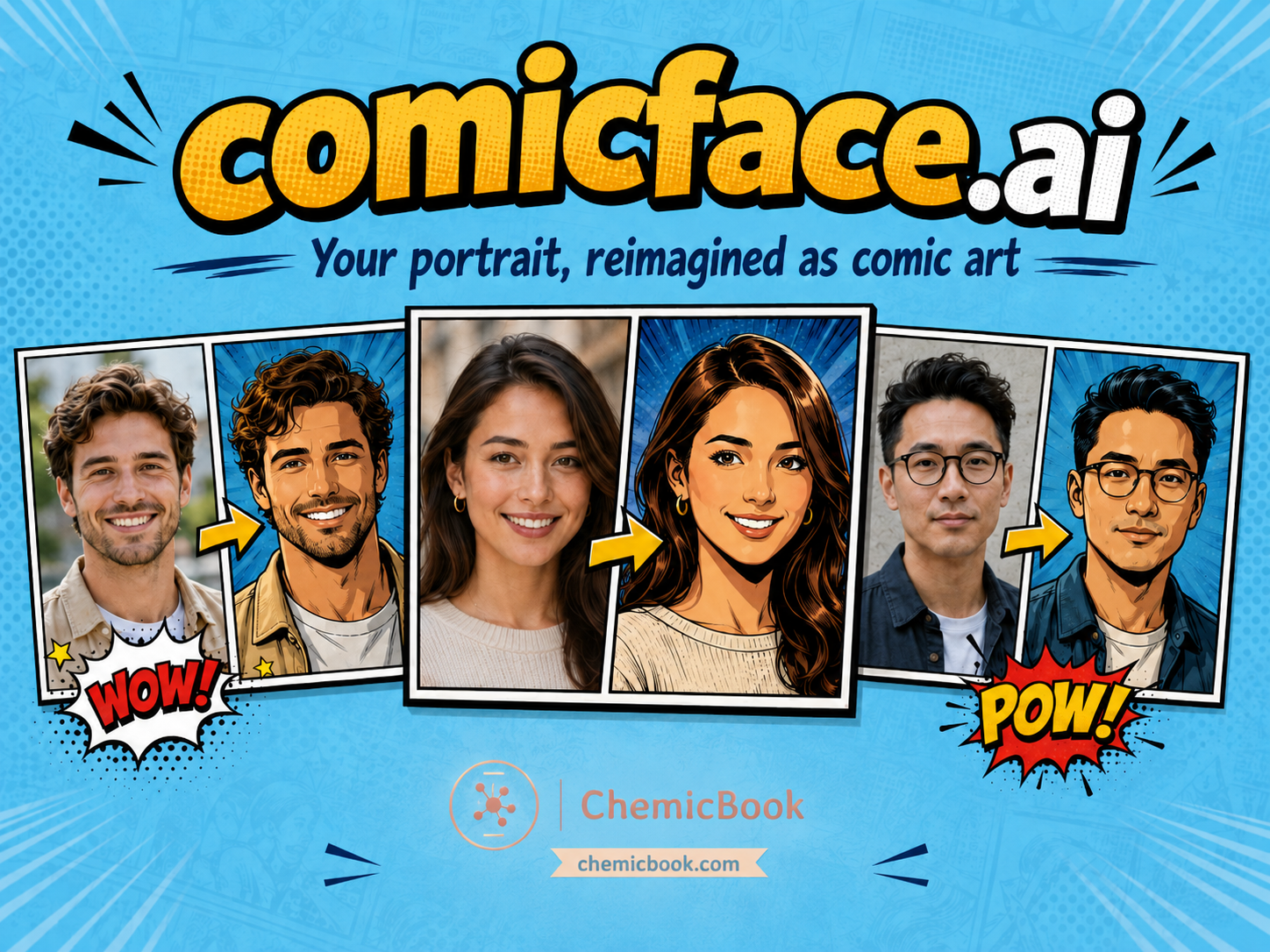
comicface.ai is a generative computer-vision project for turning portrait photos into comic-style faces. It focuses on a clear image-to-image task: preserve the face structure while changing the visual style.
The project compares two approaches to the same problem: a convolutional variational autoencoder and a Pix2Pix GAN. It also includes a Hugging Face demo so the model can be tried interactively.
What comicface.ai Does
- Converts face images into comic-style versions.
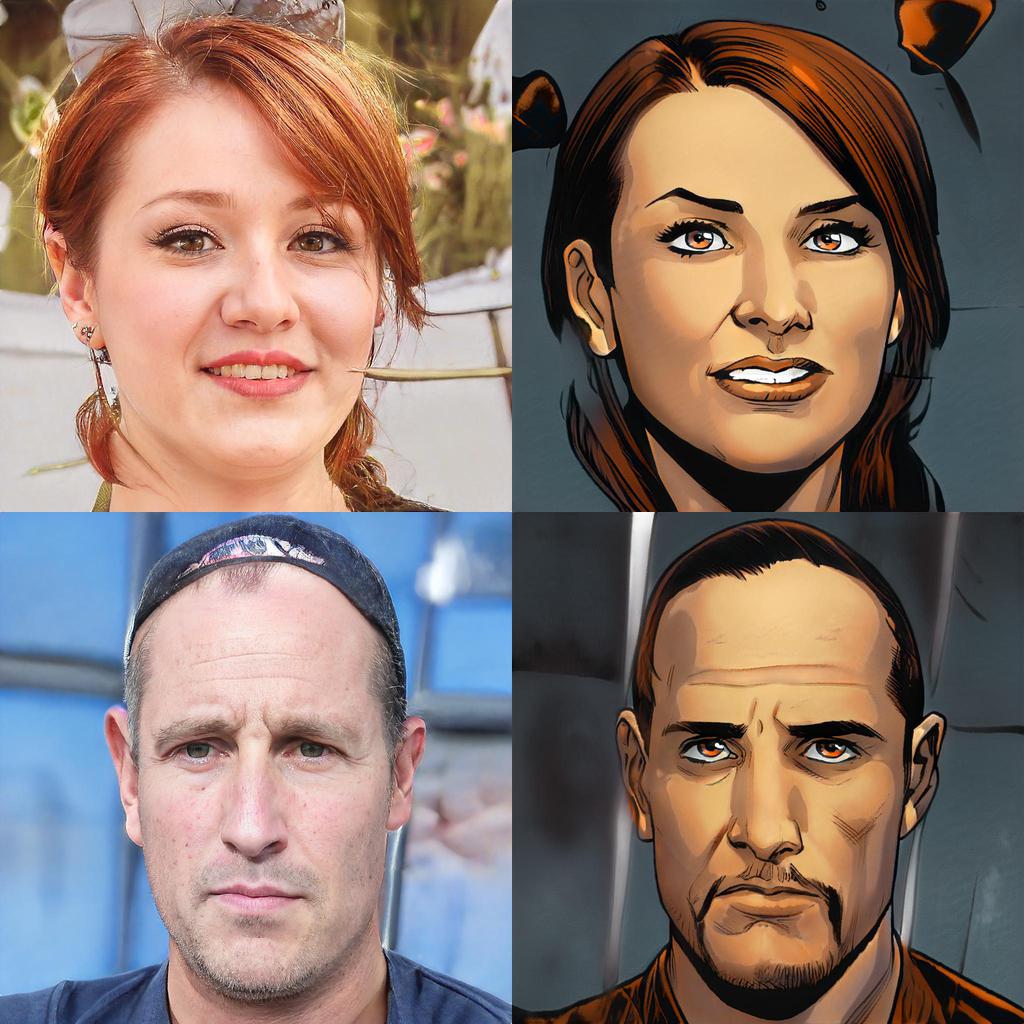
- Uses a paired dataset of real and comic-style synthetic faces.
- Compares CVAE and Pix2Pix-style image translation approaches.
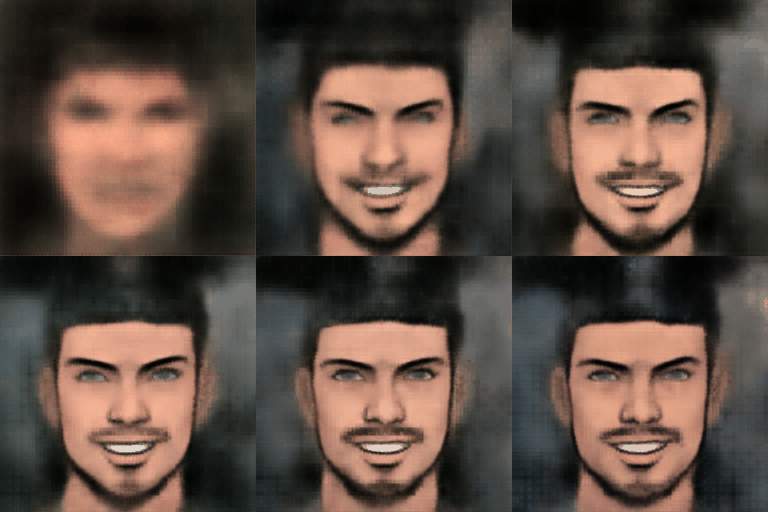
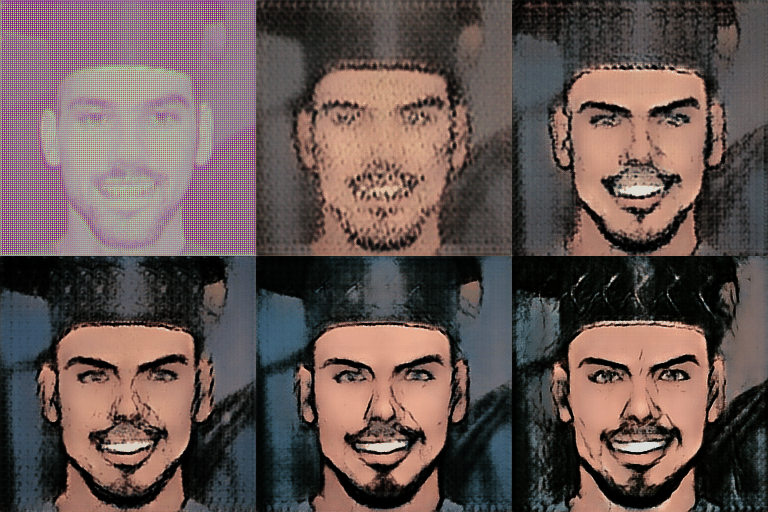
- Includes training progress GIFs and sample generated outputs.
- Provides a Hugging Face Space for interactive use.
Dataset
The project uses a Kaggle dataset with 10,000 paired face/comic images. Each pair gives the model both the source portrait and the desired comic-style target, which makes it suitable for supervised image-to-image translation.
This paired setup is especially useful for Pix2Pix, where the model learns a mapping from one visual domain to another rather than generating images from scratch.
Models
The convolutional VAE explores a reconstruction-based approach: compress the face image into a latent representation, then decode it into a stylized output. This can capture broad structure, but may produce softer or less detailed results.
Pix2Pix frames the task as conditional generation. A generator creates the comic-style image while a discriminator pushes the output toward sharper, more realistic comic-domain examples. The repository includes architecture diagrams, training notebooks, inference notebooks, and saved training progress.
Results
The sample results show the difference between the two modeling approaches. The VAE gives a useful baseline for reconstruction and style transformation, while Pix2Pix is better suited for the paired translation setting and sharper visual outputs.
Limitations
The output quality depends heavily on the paired training data. A model trained on synthetic comic faces may not generalize equally well to every lighting condition, pose, face shape, or photo style. Like most image-generation systems, it also needs careful handling if used with real personal photos.
Gallery